Rheumatic conditions are common both in general and hospital practice.
Musculoskeletal symptoms are a primary feature of many multisystem
illnesses, not only in the autoimmune joint and connective tissue diseases,
but also metabolic, endocrine, neoplastic, and infectious conditions.
Symptoms are also common in the context of injury, age-related change,
and psychological distress. Many conditions in rheumatology are a major
source of morbidity and mortality.
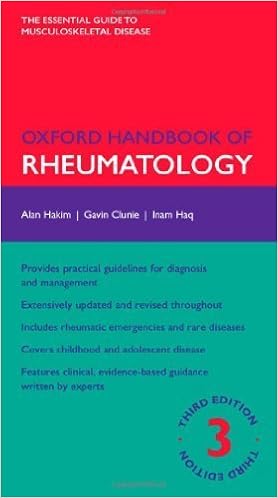
We have kept to the format of previous editions of this book, focusing
fi rst on history and physical signs in the differential diagnosis of rheumatic
disease. The reader is then encouraged to consider diseases in more
detail. There have been major advances in rheumatology, not least the
introduction of biologic therapy. The third edition refl ects this in being
up-to-date with assessment, guidelines, and treatment options in 2010.
We have also introduced a new section, Part 3.
Part 1 offers a practical guide to arriving at an appropriate differential
diagnosis given the realistic presentation of rheumatic disease; for
example, how to assess someone complaining of a pain in the elbow,
knee pain, or of diffi culty moving the shoulder, etc. The book suggests
appropriate lines of enquiry for patients who present with characteristic
patterns of abnormality such as widespread joint or muscle pain, or
joint pains in association with a rash. The aim is to provide a guide for
obtaining diagnostic information but also for discriminating good from bad
information—where to lay emphasis in eliciting a history and examination
signs. In most chapters in Part 1, text is laid out under the headings of
Taking a history, Examination, and Investigations, with the subheadings
indicating important considerations and areas of enquiry.
Part 2 lists a number of rheumatic conditions encountered in rheumatology
and general practice. There is a focus on clinical features, specifi c
fi ndings of relevant investigations, and management. There is reference
to childhood and adolescent rheumatic disease throughout. The aim is
to provide a comprehensive, clinically orientated text. Some reference is
made to disease epidemiology and pathophysiology. However, for more
detail on the basic sciences the reader is referred to The Oxford Textbook
of Rheumatology .
DOWNLOAD FILE 


0 comments:
Post a Comment